

What Is Gluten Chemical Makeup Of Gluten
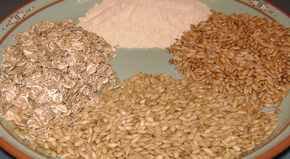
Examples of sources of gluten (clockwise from top): wheat as flour, spelt, barley, and rye every bit rolled flakes
Gluten is a structural protein naturally found in certain cereal grains. Although, specially, "gluten" pertains just to wheat proteins, in medical literature it refers to the combination of prolamin and glutelin proteins naturally occurring in all grains that accept been proved to be capable of triggering celiac illness. These include any species of wheat (such as common wheat, durum, spelt, khorasan, emmer and einkorn), barley, rye and some oat cultivars, as well as any cross hybrids of these grains (such as triticale).[1] [2] Gluten makes up 75–85% of the total protein in bread wheat.[3] [4]
Glutens, especially Triticeae glutens, have unique viscoelastic and agglutinative properties, which requite dough its elasticity, helping it rise and go along its shape and often leaving the concluding production with a chewy texture.[three] [v] [6] These properties, and its relatively low cost, brand gluten valuable to both food and non-nutrient industries.[vi]
Wheat gluten is composed of mainly two types of proteins: the glutenins[vii] and the gliadins,[eight] which in turn can exist divided into high molecular and low molecular glutenins and α/β, γ and Ω gliadins. Its homologous seed storage proteins in barley, are referred to as hordeins; in rye, secalins; and in oats, avenins.[9] These poly peptide classes are collectively referred to as "gluten".[ii] The storage proteins in other grains, such as maize (zeins) and rice (rice poly peptide), are sometimes called gluten, only they do non cause harmful effects in people with celiac disease.[1]

Breadstuff produced from wheat grains contains gluten
Gluten can trigger adverse inflammatory, immunological and autoimmune reactions in some people. The spectrum of gluten related disorders includes celiac illness in ane–two% of the general population, non-celiac gluten sensitivity in 0.5–13% of the general population, every bit well as dermatitis herpetiformis, gluten ataxia and other neurological disorders.[10] [xi] [12] [13] These disorders are treated by a gluten-free nutrition.[13]
Uses [edit]

Wheat, a prime source of gluten
Breadstuff products [edit]
Gluten forms when glutenin molecules cross-link via disulfide bonds to class a submicroscopic network attached to gliadin, which contributes viscosity (thickness) and extensibility to the mix.[3] [14] If this dough is leavened with yeast, fermentation produces carbon dioxide bubbles, which, trapped by the gluten network, cause the dough to ascension. Baking coagulates the gluten, which, forth with starch, stabilizes the shape of the final product. Gluten content has been implicated as a factor in the staling of staff of life, perchance because information technology binds h2o through hydration.[15] [xvi]
The formation of gluten affects the texture of the baked goods.[3] Gluten's attainable elasticity is proportional to its content of glutenins with low molecular weights, as this portion contains the preponderance of the sulfur atoms responsible for the cross-linking in the gluten network.[17] [18] Farther refining of the gluten leads to chewier doughs such as those constitute in pizza and bagels, while less refining yields tender baked goods such as pastry products.[xix]
Mostly, breadstuff flours are loftier in gluten (hard wheat); pastry flours take a lower gluten content. Kneading promotes the formation of gluten strands and cross-links, creating baked products that are chewier (every bit opposed to more than brittle or crumbly). The "chewiness" increases equally the dough is kneaded for longer times. An increased moisture content in the dough enhances gluten evolution,[xix] and very wet doughs left to rise for a long time require no kneading (encounter no-knead bread). Shortening inhibits germination of cross-links and is used, along with diminished water and less kneading, when a tender and flaky production, such as a pie chaff, is desired.
The strength and elasticity of gluten in flour is measured in the blistering manufacture using a farinograph. This gives the baker a measurement of quality for different varieties of flours when developing recipes for various baked goods.[3] [20] [21]
Added gluten [edit]
In industrial production, a slurry of wheat flour is kneaded vigorously by mechanism until the gluten agglomerates into a mass.[22] [ failed verification ] This mass is collected by centrifugation, then transported through several stages integrated in a continuous procedure. Most 65% of the h2o in the wet gluten is removed by means of a screw press; the remainder is sprayed through an atomizer nozzle into a drying chamber, where it remains at an elevated temperature for a brusque time to allow the water to evaporate without denaturing the gluten.[ citation needed ] The procedure yields a flour-like powder with a 7% moisture content, which is air cooled and pneumatically transported to a receiving vessel. In the final step, the processed gluten is sifted and milled to produce a uniform product.[22]
This flour-like powder, when added to ordinary flour dough, may assistance improve the dough's ability to increment in book. The resulting mixture also increases the bread's structural stability and chewiness.[23] Gluten-added dough must be worked vigorously to induce it to rise to its full capacity; an automatic bread automobile or food processor may be required for loftier-gluten kneading.[24] Generally, higher gluten levels are associated with higher overall protein content.[25]
Imitation meats [edit]
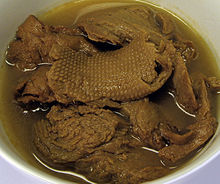
Gluten is often used in imitation meats (such as this mock duck) to provide supplemental protein and in vegetarian diets
Gluten, peculiarly wheat gluten, is often the basis for false meats resembling beef, chicken, duck (see mock duck), fish and pork. When cooked in goop, gluten absorbs some of the surrounding liquid (including the season) and becomes firm to the bite.[26] [27] This apply of gluten is a popular means of adding supplemental protein to many vegetarian diets. In abode or eatery cooking, wheat gluten is prepared from flour by kneading the flour nether water, agglomerating the gluten into an elastic network known equally a dough, so washing out the starch.[three]
Other consumer products [edit]
Gluten is often present in beer and soy sauce, and can be used as a stabilizing agent in more unexpected nutrient products, such as ice cream and ketchup. Foods of this kind may therefore present problems for a pocket-sized number of consumers because the subconscious gluten constitutes a hazard for people with coeliac disease and gluten sensitivities. The protein content of some pet foods may also be enhanced by adding gluten.[28]
Gluten is likewise used in cosmetics, hair products and other dermatological preparations.[29]
Disorders [edit]
"Gluten-related disorders" is the umbrella term for all diseases triggered by gluten, which include celiac illness (CD), non-celiac gluten sensitivity (NCGS), wheat allergy, gluten ataxia and dermatitis herpetiformis (DH).[12]
Pathophysiological research [edit]
The gluten peptides are responsible for triggering gluten-related disorders.[30] In people who have celiac disease, the peptides crusade injury of the intestines, ranging from inflammation to partial or total destruction of the intestinal villi.[31] [32] To report mechanisms of this damage, laboratory experiments are done in vitro and in vivo.[33] [32] Among the gluten peptides, gliadin has been studied extensively.[xxx]
In vitro and in vivo studies [edit]
In the context of celiac disease, gliadin peptides are classified in basic and clinical research as toxic or immunogenic, depending on their mechanism of action:[xxx] [34]
- The toxic peptides are those capable of directly affecting cells and intestinal preparations in vitro, producing cellular damage in vivo and eliciting the innate immune response.[30] [34] In vitro, the peptides promote cell apoptosis (a form of programmed cell death) and inhibit the synthesis of nucleic acids (Dna and RNA) and proteins, reducing the viability of cells.[35] Experiments in vivo with normal mice showed that they cause an increase in cell decease and the production of interferon type I (an inflammatory mediator).[30] In vitro, gluten alters cellular morphology and movement, cytoskeleton organisation, oxidative residuum, and tight junctions.[36] [35] [37]
- The immunogenic peptides are those able to actuate T cells in vitro.[30]
At least 50 epitopes of gluten may produce cytotoxic, immunomodulatory, and gut-permeating activities.[36]
The effect of oat peptides (avenins) in celiac people depends on the oat cultivar consumed because of prolamin genes, protein amino acid sequences, and the immunotoxicity of prolamins which vary among oat varieties.[38] [39] [40] In addition, oat products may be cross-contaminated with the other gluten-containing cereals.[39]
Incidence [edit]
Every bit of 2017[update], gluten-related disorders were increasing in frequency in different geographic areas.[37] [41] [42] [43] Some suggested explanations for this increment include the following: the growing westernization of diets,[41] the increasing employ of wheat-based foods included in the Mediterranean diet,[44] [45] the progressive replacement of rice by wheat in many countries in Asia, the Centre East, and Northward Africa,[41] the evolution in recent years of new types of wheat with a higher amount of cytotoxic gluten peptides,[46] [47] and the college content of gluten in bread and bakery products due to the reduction of dough fermentation time.[46] [48]
Celiac disease [edit]

Medical animation nevertheless showing flattened intestinal villi.
Celiac illness (CD) is a chronic, multiple-organ autoimmune disorder primarily affecting the small intestine caused by the ingestion of wheat, barley, rye, oats, and derivatives, that appears in genetically predisposed people of all ages.[49] CD is not only a gastrointestinal disease, because it may involve several organs and cause an extensive variety of not-gastrointestinal symptoms, and most importantly, it may exist apparently asymptomatic.[two] [50] Many asymptomatic people become accepted to living with a chronic bad health status as if information technology were normal, but they are able to recognize that they actually had symptoms related to celiac illness after starting a gluten-free nutrition and improvement occurs.[fifty] [51] [42] Added difficulties for diagnosis are the fact that serological markers (anti-tissue transglutaminase [TG2]) are not e'er present[52] and many people may take small-scale mucosal lesions, without atrophy of the intestinal villi.[53]
CD affects approximately 1–2% of the general population,[10] merely most cases remain unrecognized, undiagnosed and untreated, and at risk for serious long-term health complications.[10] [42] [54] [55] People may suffer severe disease symptoms and exist subjected to extensive investigations for many years, before a proper diagnosis is achieved.[51] Untreated CD may cause malabsorption, reduced quality of life, iron deficiency, osteoporosis, an increased hazard of intestinal lymphomas, and greater bloodshed.[56] CD is associated with some other autoimmune diseases, such as diabetes mellitus type i, thyroiditis,[57] gluten ataxia, psoriasis, vitiligo, autoimmune hepatitis, dermatitis herpetiformis, primary sclerosing cholangitis, and more.[49] [57]
CD with "classic symptoms", which include gastrointestinal manifestations such as chronic diarrhea and intestinal distention, malabsorption, loss of appetite, and impaired growth, is currently the least common presentation course of the disease and affects predominantly small-scale children more often than not younger than 2 years of age.[49] [51] [54]
CD with "non-classic symptoms" is the most common clinical blazon[51] and occurs in older children (over two years onetime),[51] adolescents, and adults.[51] It is characterized by milder or even absent gastrointestinal symptoms and a wide spectrum of non-abdominal manifestations that tin involve whatever organ of the body, and very frequently may be completely asymptomatic[54] both in children (at least in 43% of the cases[58]) and adults.[54]
Asymptomatic CD (ACD) is nowadays in the majority of affected patients and is characterized by the absenteeism of classical gluten-intolerance signs, such as diarrhea, bloating, and intestinal pain. All the same, these individuals very oft develop diseases that tin exist related with gluten intake. Gluten tin be degraded into several morphine-like substances, named gluten exorphins. These compounds have proven opioid furnishings and could mask the deleterious effects of gluten protein on gastrointestinal lining and function.[59]
Not-celiac gluten sensitivity [edit]
Non-celiac gluten sensitivity (NCGS) is described as a condition of multiple symptoms that improves when switching to a gluten-free nutrition, later celiac illness and wheat allergy are excluded.[60] [61] Recognized since 2010,[62] [63] it is included among gluten-related disorders.[62] Its pathogenesis is not yet well understood, but the activation of the innate immune arrangement, the direct negative effects of gluten and probably other wheat components, are implicated.[63] [35]
NCGS is the most mutual syndrome of gluten intolerance,[62] [64] with a prevalence estimated to exist 6-10%.[11] NCGS is condign a more common diagnosis, merely its true prevalence is difficult to determine considering many people self-diagnose and start a gluten-free nutrition, without having previously tested for celiac disease or having the dietary prescription from a dr..[65] People with NCGS and gastrointestinal symptoms remain habitually in a "no human's state", without beingness recognized past the specialists and lacking the acceptable medical care and treatment.[66] Almost of these people have a long history of wellness complaints and unsuccessful consultations with numerous physicians, trying to become a diagnosis of celiac disease, only they are only labeled as irritable bowel syndrome.[66] [67] A consistent although undefined number of people eliminate gluten because they identify it every bit responsible for their symptoms and these ameliorate with the gluten-gratis diet, so they self-diagnose as NCGS.[66] [67]
People with NCGS may develop gastrointestinal symptoms, which resemble those of irritable bowel syndrome or wheat allergy,[62] [35] or a wide diversity of not-gastrointestinal symptoms, such as headache, chronic fatigue, fibromyalgia, atopic diseases, allergies, neurological diseases, or psychiatric disorders, amidst others.[56] [63] [68] The results of a 2017 report suggest that NCGS may be a chronic disorder, as is the instance with celiac illness.[69]
Besides gluten, boosted components present in wheat, rye, barley, oats, and their derivatives, including other proteins called amylase-trypsin inhibitors (ATIs) and brusk-concatenation carbohydrates known as FODMAPs, may cause NCGS symptoms.[63] As of 2019, reviews conclude that although FODMAPs nowadays in wheat and related grains may play a role in non-celiac gluten sensitivity, they just explain certain gastrointestinal symptoms, such equally bloating, only not the extra-digestive symptoms that people with non-celiac gluten sensitivity may develop, such as neurological disorders, fibromyalgia, psychological disturbances, and dermatitis.[seventy] [69] [63] ATIs may cause toll-like receptor four (TLR4)-mediated intestinal inflammation in humans.[71] [72]
Wheat allergy [edit]
People can besides experience adverse effects of wheat equally result of a wheat allergy.[55] As with most allergies, a wheat allergy causes the immune system to respond abnormally to a component of wheat that it treats every bit a threatening foreign body. This immune response is oft fourth dimension-limited and does not crusade lasting harm to body tissues.[73] Wheat allergy and celiac affliction are different disorders.[55] [74] Gastrointestinal symptoms of wheat allergy are like to those of celiac illness and not-celiac gluten sensitivity, but there is a different interval between exposure to wheat and onset of symptoms. An allergic reaction to wheat has a fast onset (from minutes to hours) later on the consumption of food containing wheat and could include anaphylaxis.[52]
Gluten clutter [edit]
A male person with gluten ataxia: previous situation and evolution later on three months of gluten-free nutrition
Gluten ataxia is an autoimmune illness triggered by the ingestion of gluten.[75] With gluten clutter, damage takes place in the cerebellum, the residuum center of the encephalon that controls coordination and complex movements similar walking, speaking and swallowing, with loss of Purkinje cells. People with gluten clutter ordinarily present gait abnormality or incoordination and tremor of the upper limbs. Gaze-evoked nystagmus and other ocular signs of cerebellar dysfunction are common. Myoclonus, palatal tremor, and opsoclonus-myoclonus may too appear.[76]
Early diagnosis and treatment with a gluten-free diet can improve ataxia and prevent its progression. The effectiveness of the handling depends on the elapsed time from the onset of the ataxia until diagnosis, because the death of neurons in the cerebellum as a result of gluten exposure is irreversible.[76] [77]
Gluten ataxia accounts for 40% of ataxias of unknown origin and xv% of all ataxias.[76] [78] Less than 10% of people with gluten ataxia present whatsoever gastrointestinal symptom, nevertheless about 40% have intestinal damage.[76]
Other neurological disorders [edit]
In improver to gluten ataxia, gluten sensitivity can cause a wide spectrum of neurological disorders, which develop with or without the presence of digestive symptoms or intestinal damage.[13] These include peripheral neuropathy, epilepsy, headache, encephalopathy, vascular dementia, and various movement disorders (restless legs syndrome, chorea, parkinsonism, Tourette syndrome, palatal tremor, myoclonus, dystonia, opsoclonus myoclonus syndrome, paroxysms, dyskinesia, myorhythmia, myokymia).[13] [79]
The diagnosis of underlying gluten sensitivity is complicated and delayed when there are no digestive symptoms. People who exercise experience gastrointestinal problems are more likely to receive a correct diagnosis and handling. A strict gluten-complimentary diet is the first-line treatment, which should exist started every bit soon as possible. Information technology is effective in virtually of these disorders. When dementia has progressed to an avant-garde caste, the diet has no beneficial effect. Cortical myoclonus appears to exist treatment-resistant on both gluten-complimentary diet and immunosuppression.[13]
Labeling [edit]
People with gluten-related disorders accept to remove gluten from their diet strictly, and so they need articulate labeling rules.[lxxx] The term "gluten-free" is generally used to point a supposed harmless level of gluten rather than a complete absence.[81] The exact level at which gluten is harmless is uncertain and controversial. A 2008 systematic review tentatively concluded that consumption of less than 10 mg of gluten per solar day is unlikely to crusade intestinal damage in people with celiac disease, although information technology noted that few reliable studies had been done.[81] Regulation of the characterization "gluten-complimentary" varies.[80]
International standards [edit]
The Codex Alimentarius international standards for food labeling has a standard relating to the labeling of products as "gluten-free". It only applies to foods that would commonly contain gluten.[82]
Brazil [edit]
By law in Brazil, all food products must display labels clearly indicating whether or non they comprise gluten.[83]
Canada [edit]
Labels for all food products sold in Canada must conspicuously identify the presence of gluten if it is present at a level greater than 20 parts per meg.[84]
European Spousal relationship [edit]
In the European Union, all prepackaged foods and non-prepacked foods from a eating place, take-out nutrient wrapped just before sale, or unpackaged food served in institutions must be identified if gluten-gratis.[85] "Gluten-gratuitous" is divers as 20 parts per million of gluten or less and "very low gluten" is 100 parts per million of gluten or less; only foods with cereal ingredients processed to remove gluten can claim "very depression gluten" on labels.[85]
All foods containing gluten every bit an ingredient must exist labelled accordingly as gluten is defined equally one of the 14 recognised EU allergens.[86]
United States [edit]
In the United States, gluten is not listed on labels unless added as a standalone ingredient. Wheat or other allergens are listed after the ingredient line. The Us Nutrient and Drug Administration (FDA) has historically classified gluten as "generally recognized as condom" (GRAS). In August 2013, the FDA issued a final ruling, effective August 2014, that divers the term "gluten-free" for voluntary use in the labeling of foods as meaning that the corporeality of gluten independent in the food is beneath 20 parts per meg.[87]
See besides [edit]
- Gliadin
- Gluten-complimentary nutrition
- Gluten exorphin
References [edit]
- ^ a b Food and Drug Administration (January 2007). "Food Labeling; Gluten-Complimentary Labeling of Foods" (PDF). Archived from the original (PDF) on 2007-01-26.
- ^ a b c Biesiekierski JR (2017). "What is gluten?". J Gastroenterol Hepatol (Review). 32 Suppl one: 78–81. doi:x.1111/jgh.13703. PMID 28244676.
Similar proteins to the gliadin constitute in wheat be as secalin in rye, hordein in barley, and avenins in oats, and are collectively referred to as 'gluten.' The gluten found in all of these grains has been identified equally the component capable of triggering the allowed-mediated disorder, celiac affliction.
- ^ a b c d e f Shewry, P. R.; Halford, N. G.; Belton, P. Due south.; Tatham, A. South. (2002). "The structure and properties of gluten: An rubberband protein from wheat grain". Philosophical Transactions of the Royal Guild B: Biological Sciences. 357 (1418): 133–142. doi:10.1098/rstb.2001.1024. PMC1692935. PMID 11911770.
- ^ "Gluten'south role in breadstuff baking performance". Canadian Grain Commission. 29 March 2016.
- ^ Lamacchia C, Camarca A, Picascia S, Di Luccia A, Gianfrani C (Jan 29, 2014). "Cereal-based gluten-free nutrient: how to reconcile nutritional and technological properties of wheat proteins with condom for celiac disease patients". Nutrients (Review). vi (2): 575–90. doi:10.3390/nu6020575. PMC3942718. PMID 24481131.
the distinctive characteristic that makes wheat unique is, precisely, the visco-elasticity of gluten. When the grain is milled and mixed with h2o, storage proteins form a dough, capable of retaining gas bubbling. These properties make wheat suitable for the grooming of a keen variety of food products
- ^ a b 24-hour interval L, Augustin MA, Batey IL, Wrigley, CW (February 2006). "Wheat-gluten uses and industry needs". Trends in Food Science & Technology (Review). 17 (ii): 82–ninety. doi:10.1016/j.tifs.2005.10.003.
Given the unique properties of wheat gluten, it is not surprising that it has been the subject of intense attending by the food industry. (...) Gluten does have economical benefits over and above the more than expensive milk- or soy-protein products (Table 1), and its functional properties, which other products cannot duplicate, give information technology a unique place among the various protein products. (...) Dissimilar whey and soy proteins, gluten or wheat proteins are not loftier in biological value and have not been widely researched for nutritional advantages.
- ^ Payne, P. I. (2012-12-06). "Endosperm Proteins". In Blonstein, A. D.; King, P. J. (eds.). A Genetic Approach to Plant Biochemistry. Springer Science & Business organisation Media. p. 210. ISBN9783709169896.
- ^ Zhao, Hefei (February 2020). "Comparison of wheat, soybean, rice, and pea protein properties for effective applications in food products". Journal of Food Biochemistry. (44)four: e13157. doi:ten.1111/jfbc.13157 – via Weily.
- ^ Rosentrater, Kurt A.; Evers, A.D. (2018). "Chemical components and nutrition". Kent's Applied science of Cereals. pp. 267–368. doi:10.1016/B978-0-08-100529-three.00004-ix. ISBN978-0-08-100529-3.
- ^ a b c Lundin KE, Wijmenga C (Sep 2015). "Coeliac illness and autoimmune affliction-genetic overlap and screening". Nat Rev Gastroenterol Hepatol. 12 (9): 507–15. doi:10.1038/nrgastro.2015.136. PMID 26303674. S2CID 24533103.
- ^ a b Molina-Infante J, Santolaria Due south, Montoro M, Esteve Yard, Fernández-Bañares F (2014). "[Non-celiac gluten sensitivity: a disquisitional review of electric current evidence] [Commodity in Spanish]". Gastroenterol Hepatol. 37 (6): 362–71. doi:10.1016/j.gastrohep.2014.01.005. PMID 24667093.
- ^ a b Ludvigsson JF, Leffler DA, Bai JC, Biagi F, Fasano A, Green PH, Hadjivassiliou Yard, Kaukinen K, Kelly CP, Leonard JN, Lundin KE, Murray JA, Sanders DS, Walker MM, Zingone F, Ciacci C (January 2013). "The Oslo definitions for coeliac disease and related terms". Gut (Review). 62 (ane): 43–52. doi:10.1136/gutjnl-2011-301346. PMC3440559. PMID 22345659.
- ^ a b c d e Zis P, Hadjivassiliou M (26 Feb 2019). "Treatment of Neurological Manifestations of Gluten Sensitivity and Coeliac Disease". Curr Treat Options Neurol (Review). 21 (3): ten. doi:10.1007/s11940-019-0552-seven. PMID 30806821.
- ^ Woychick, JH; et al. "The Gluten Proteins and Deamidated Soluble Wheat Protein". Retrieved 8 September 2009.
- ^ Sahlström, S.; Bråthen, Eastward. (January 1997). "Effects of enzyme preparations for blistering, mixing time and resting time on staff of life quality and bread staling". Food Chemistry. 58 (1–2): 75–fourscore. doi:10.1016/S0308-8146(96)00216-half dozen.
- ^ Magnus, Eastward.Chiliad.; Bråthen, Eastward.; Sahlström, S.; Færgestad, E.Mosleth; Ellekjær, M.R. (May 1997). "Effects of Wheat Variety and Processing Atmospheric condition in Experimental Staff of life Baking Studied by Univariate and Multivariate Analyses". Journal of Cereal Science. 25 (3): 289–301. doi:10.1006/jcrs.1996.0094.
- ^ Edwards, North. M.; Mulvaney, South. J.; Scanlon, Yard. Yard.; Dexter, J. East. (November 2003). "Role of Gluten and Its Components in Determining Durum Semolina Dough Viscoelastic Backdrop". Cereal Chemistry. lxxx (six): 755–763. doi:10.1094/CCHEM.2003.80.half dozen.755.
- ^ Tosi, Paola; Masci, Stefania; Giovangrossi, Angela; D'Ovidio, Renato; Bekes, Frank; Larroque, Oscar; Napier, Johnathan; Shewry, Peter (September 2005). "Modification of the Low Molecular Weight (LMW) Glutenin Composition of Transgenic Durum Wheat: Effects on Glutenin Polymer Size and Gluten Functionality". Molecular Breeding. 16 (2): 113–126. doi:ten.1007/s11032-005-5912-one. S2CID 24914227.
- ^ a b "Baking Engineering science, Bread". Bakersassist. Archived from the original on 2007-08-23. Retrieved 2007-08-14 .
- ^ "Farinograph". Wheat Quality and Carbohydrate Research. North Dakota State Academy. 22 September 2014. Archived from the original on 23 December 2014. Retrieved eight December 2014.
- ^ Oliver, JR; Allen, HM (January 1992). "The prediction of staff of life blistering operation using the farinograph and extensograph". Journal of Cereal Science. xv (1): 79–89. doi:10.1016/S0733-5210(09)80058-1.
- ^ a b Sakhare, S. D.; Inamdar, A. A.; Soumya, C; Indrani, D; Rao, Yard. 5. (2013). "Result of flour particle size on microstructural, rheological and physico-sensory characteristics of bread and south Indian parotta". Journal of Nutrient Science and Applied science. 51 (12): 4108–4113. doi:10.1007/s13197-013-0939-5. PMC4252461. PMID 25477689.
- ^ Amendola, J.; Rees, N.; Lundberg, D. Due east. (2002). Understanding Baking.
- ^ Eckhardt, L.W.; Butts, D.C. (1997). Rustic European Breads from your Bread Automobile.
- ^ "Against the Grain". The New Yorker. iii November 2014. Retrieved 8 December 2014.
- ^ Bates, Dorothy R.; Wingate, Colby (1993). Cooking with Gluten and Seitan. Volume Publishing Visitor. p. 128. ISBN978-0-913990-95-vii.
- ^ Abramowski, Nicole (11 March 2011). "How to Make Seitan: An Illustrated Guide". Vegan Nom Noms . Retrieved viii Dec 2014.
- ^ "Pet Foods". International Wheat Gluten Association. Archived from the original on 2007-10-07. Retrieved 14 August 2007.
- ^ Humbert, Philippe; Pelletier, Fabien; Dreno, Brigitte; Puzenat, Eve; Aubin, François (1 January 2006). "Gluten intolerance and skin diseases". European Journal of Dermatology. 16 (i): iv–eleven. PMID 16436335.
- ^ a b c d east f Lammers KM, Herrera MG, Dodero VI (2018). "Translational Chemistry Meets Gluten-Related Disorders". ChemistryOpen (Review). 7 (3): 217–232. doi:10.1002/open up.201700197. PMC5838388. PMID 29531885.
- ^ Dickson BC, Streutker CJ, Chetty R (2006). "Coeliac illness: an update for pathologists". J Clin Pathol (Review). 59 (10): 1008–sixteen. doi:x.1136/jcp.2005.035345. PMC1861744. PMID 17021129.
- ^ a b Stoven S, Murray JA, Marietta EV (2013). "Latest in vitro and in vivo models of celiac disease". Expert Opin Drug Discov (Review). eight (4): 445–57. doi:10.1517/17460441.2013.761203. PMC3605231. PMID 23293929.
{{cite journal}}: CS1 maint: multiple names: authors list (link) - ^ Kupfer SS, Jabri B (2012). "Pathophysiology of celiac disease". Gastrointest Endosc Clin Northward Am (Review). 22 (four): 639–60. doi:ten.1016/j.giec.2012.07.003. PMC3872820. PMID 23083984.
- ^ a b Silano M, Vincentini O, De Vincenzi Grand (2009). "Toxic, immunostimulatory and antagonist gluten peptides in celiac affliction". Curr Med Chem (Review). 16 (12): 1489–98. doi:10.2174/092986709787909613. PMID 19355902.
- ^ a b c d Elli L, Roncoroni L, Bardella MT (2015). "Non-celiac gluten sensitivity: Time for sifting the grain". Earth J Gastroenterol (Review). 21 (27): 8221–6. doi:ten.3748/wjg.v21.i27.8221. PMC4507091. PMID 26217073.
{{cite journal}}: CS1 maint: multiple names: authors list (link) - ^ a b Fasano A (Jan 2011). "Zonulin and its regulation of intestinal bulwark role: the biological door to inflammation, autoimmunity, and cancer". Physiol. Rev. (Review). 91 (1): 151–75. CiteSeerXx.ane.1.653.3967. doi:10.1152/physrev.00003.2008. PMID 21248165.
At that place are at to the lowest degree 50 toxic epitopes in gluten peptides exerting cytotoxic, immunomodulatory, and gut-permeating activities.
- ^ a b Leonard MM, Sapone A, Catassi C, Fasano A (2017). "Celiac Disease and Nonceliac Gluten Sensitivity: A Review". JAMA (Review). 318 (7): 647–656. doi:10.1001/jama.2017.9730. PMID 28810029. S2CID 205094729.
Previous studies have shown that gliadin tin crusade an immediate and transient increment in gut permeability. This permeating result is secondary to the binding of specific undigestible gliadin fragments to the CXCR3 chemokine receptor with subsequent release of zonulin, a modulator of intercellular tight junctions. This process takes place in all individuals who ingest gluten. For the majority, these events do not lead to abnormal consequences. However, these same events can lead to an inflammatory process in genetically predisposed individuals when the immunologic surveillance system mistakenly recognizes gluten as a pathogen.
- ^ Penagini F, Dilillo D, Meneghin F, Mameli C, Fabiano V, Zuccotti GV (Nov 18, 2013). "Gluten-free diet in children: an approach to a nutritionally acceptable and balanced nutrition". Nutrients (Review). five (xi): 4553–65. doi:10.3390/nu5114553. PMC3847748. PMID 24253052.
- ^ a b de Souza MC, Deschênes ME, Laurencelle S, Godet P, Roy CC, Djilali-Saiah I (2016). "Pure Oats as Part of the Canadian Gluten-Free Diet in Celiac Illness: The Need to Revisit the Issue". Tin can J Gastroenterol Hepatol (Review). 2016: i–8. doi:ten.1155/2016/1576360. PMC4904650. PMID 27446824.
- ^ Comino I, Moreno Mde L, Sousa C (Nov 7, 2015). "Role of oats in celiac affliction". World J Gastroenterol. 21 (41): 11825–31. doi:ten.3748/wjg.v21.i41.11825. PMC4631980. PMID 26557006.
It is necessary to consider that oats include many varieties, containing various amino acid sequences and showing different immunoreactivities associated with toxic prolamins. As a issue, several studies accept shown that the immunogenicity of oats varies depending on the cultivar consumed. Thus, it is essential to thoroughly report the variety of oats used in a food ingredient earlier including it in a gluten-free diet.
- ^ a b c Tovoli F, Masi C, Guidetti E, Negrini 1000, Paterini P, Bolondi L (Mar sixteen, 2015). "Clinical and diagnostic aspects of gluten related disorders". World J Clin Cases (Review). 3 (3): 275–84. doi:10.12998/wjcc.v3.i3.275. PMC4360499. PMID 25789300.
- ^ a b c Lionetti E, Gatti Southward, Pulvirenti A, Catassi C (Jun 2015). "Celiac disease from a global perspective". Best Pract Res Clin Gastroenterol (Review). 29 (three): 365–79. doi:10.1016/j.bpg.2015.05.004. PMID 26060103.
- ^ Sapone A, Bai JC, Ciacci C, Dolinsek J, Green PH, Hadjivassiliou M, Kaukinen Grand, Rostami K, Sanders DS, Schumann Thou, Ullrich R, Villalta D, Volta U, Catassi C, Fasano A (2012). "Spectrum of gluten-related disorders: consensus on new nomenclature and classification". BMC Medicine (Review). 10: xiii. doi:10.1186/1741-7015-10-13. PMC3292448. PMID 22313950.

- ^ Volta U, Caio Chiliad, Tovoli F, De Giorgio R (2013). "Non-celiac gluten sensitivity: questions notwithstanding to be answered despite increasing awareness". Cellular and Molecular Immunology (Review). x (5): 383–392. doi:10.1038/cmi.2013.28. PMC4003198. PMID 23934026.
- ^ Guandalini S, Polanco I (Apr 2015). "Nonceliac gluten sensitivity or wheat intolerance syndrome?". J Pediatr (Review). 166 (four): 805–11. doi:x.1016/j.jpeds.2014.12.039. PMID 25662287.
The increase in world-wide consumption of a Mediterranean diet, which includes a broad range of wheat-based foods, has possibly contributed to an alarming rise in the incidence of wheat (gluten?)-related disorders.1, 2
- ^ a b Volta U, Caio G, Tovoli F, De Giorgio R (September 2013). "Non-celiac gluten sensitivity: questions yet to be answered despite increasing sensation". Cellular & Molecular Immunology (Review). 10 (5): 383–92. doi:ten.1038/cmi.2013.28. PMC4003198. PMID 23934026.
mechanization of farming and the growing industrial use of pesticides have favored the evolution of new types of wheat with a higher corporeality of toxic gluten peptides that cause the development of gluten-related disorders
- ^ Belderok B (2000). "Developments in bread-making processes". Institute Foods Hum Nutr (Review). 55 (1): 1–86. doi:10.1023/A:1008199314267. PMID 10823487. S2CID 46259398.
- ^ Gobbetti M, Giuseppe Rizzello C, Di Cagno R, De Angelis Chiliad (Apr 2007). "Sourdough lactobacilli and celiac disease". Nutrient Microbiol (Review). 24 (2): 187–96. doi:10.1016/j.fm.2006.07.014. PMID 17008163.
- ^ a b c Caio, Giacomo; Volta, Umberto; Sapone, Anna; Leffler, Daniel A.; De Giorgio, Roberto; Catassi, Carlo; Fasano, Alessio (2019-07-23). "Celiac affliction: a comprehensive electric current review". BMC Medicine. 17 (1): 142. doi:10.1186/s12916-019-1380-z. PMC6647104. PMID 31331324.
- ^ a b "Celiac illness". Earth Gastroenterology System Global Guidelines. July 2016. Retrieved 23 April 2017.
- ^ a b c d e f Ludvigsson JF, Card T, Ciclitira PJ, Swift GL, Nasr I, Sanders DS, Ciacci C (Apr 2015). "Support for patients with celiac disease: A literature review". United European Gastroenterol J. 3 (2): 146–59. doi:10.1177/2050640614562599. PMC4406900. PMID 25922674.
- ^ a b Fasano, A; Catassi, C (Dec xx, 2012). "Clinical practice. Celiac disease". The New England Journal of Medicine. 367 (25): 2419–26. doi:ten.1056/NEJMcp1113994. PMID 23252527.
- ^ Bold J, Rostami K (2011). "Gluten tolerance; potential challenges in treatment strategies". Gastroenterol Hepatol Bed Bench. 4 (2): 53–7. PMC4017406. PMID 24834157.
- ^ a b c d Fasano A (Apr 2005). "Clinical presentation of celiac affliction in the pediatric population". Gastroenterology. 128 (4 Suppl 1): S68–73. doi:x.1053/j.gastro.2005.02.015. PMID 15825129.
- ^ a b c Elli L, Branchi F, Tomba C, Villalta D, Norsa 50, Ferretti F, Roncoroni L, Bardella MT (Jun 2015). "Diagnosis of gluten related disorders: Celiac illness, wheat allergy and non-celiac gluten sensitivity". Earth J Gastroenterol. 21 (23): 7110–9. doi:10.3748/wjg.v21.i23.7110. PMC4476872. PMID 26109797.
- ^ a b Lebwohl B, Ludvigsson JF, Light-green PH (October 2015). "Celiac disease and non-celiac gluten sensitivity". BMJ (Review). 351: h4347. doi:x.1136/bmj.h4347. PMC4596973. PMID 26438584.
- ^ a b Lundin KE, Wijmenga C (Sep 2015). "Coeliac disease and autoimmune affliction-genetic overlap and screening". Nat Rev Gastroenterol Hepatol. 12 (9): 507–fifteen. doi:ten.1038/nrgastro.2015.136. PMID 26303674. S2CID 24533103.
- ^ Vriezinga SL, Schweizer JJ, Koning F, Mearin ML (Sep 2015). "Coeliac affliction and gluten-related disorders in childhood". Nature Reviews. Gastroenterology & Hepatology (Review). 12 (ix): 527–36. doi:10.1038/nrgastro.2015.98. PMID 26100369. S2CID 2023530.
- ^ Pruimboom, Leo; de Punder, Karin (24 November 2015). "The opioid effects of gluten exorphins: asymptomatic celiac illness". Journal of Health, Population, and Nutrition (Review). 33: 24. doi:10.1186/s41043-015-0032-y. PMC5025969. PMID 26825414.
- ^ Mooney, P; Aziz, I; Sanders, D (2013). "Not-celiac gluten sensitivity: clinical relevance and recommendations for futurity research". Neurogastroenterology & Motility. 25 (11): 864–871. doi:ten.1111/nmo.12216. PMID 23937528. S2CID 9277897.
- ^ Nijeboer, P; Bontkes, H; Mulder, C; Bouma, K (2013). "Non-celiac gluten sensitivity. Is it in the gluten or the grain?". Journal of Gastrointestinal and Liver Disorders. 22 (four): 435–40. PMID 24369326.
- ^ a b c d Catassi C, Bai JC, Bonaz B, Bouma G, Calabrò A, Carroccio A, Castillejo G, Ciacci C, Cristofori F, Dolinsek J, Francavilla R, Elli L, Green P, Holtmeier W, Koehler P, Koletzko South, Meinhold C, Sanders D, Schumann M, Schuppan D, Ullrich R, Vécsei A, Volta U, Zevallos V, Sapone A, Fasano A (Sep 2013). "Non-Celiac Gluten sensitivity: the new frontier of gluten related disorders". Nutrients. 5 (10): 3839–53. doi:10.3390/nu5103839. PMC3820047. PMID 24077239.
- ^ a b c d e Fasano, Alessio; Sapone, Anna; Zevallos, Victor; Schuppan, Detlef (May 2015). "Nonceliac Gluten Sensitivity". Gastroenterology. 148 (6): 1195–1204. doi:10.1053/j.gastro.2014.12.049. PMID 25583468.
- ^ Czaja-Bulsa G (Apr 2015). "Non coeliac gluten sensitivity - A new disease with gluten intolerance". Clin Nutr. 34 (ii): 189–94. doi:10.1016/j.clnu.2014.08.012. PMID 25245857.
- ^ Igbinedion SO, Ansari J, Vasikaran A, Gavins FN, Jordan P, Boktor M, Alexander JS (Oct 2017). "Non-celiac gluten sensitivity: All wheat set on is not celiac". World Journal of Gastroenterology (Review). 23 (20): 7201–7210. doi:ten.3748/wjg.v23.i40.7201. PMC5677194. PMID 29142467.
- ^ a b c Verdu EF, Armstrong D, Murray JA (2009). "Between celiac disease and irritable bowel syndrome: the "no man's country" of gluten sensitivity". Am J Gastroenterol (Review). 104 (6): 1587–94. doi:10.1038/ajg.2009.188. PMC3480312. PMID 19455131.
- ^ a b Mansueto, Pasquale; Seidita, Aurelio; D'Alcamo, Alberto; Carroccio, Antonio (2014). "Non-Celiac Gluten Sensitivity: Literature Review". Journal of the American College of Nutrition (Review). 33 (i): 39–54. doi:10.1080/07315724.2014.869996. hdl:10447/90208. PMID 24533607. S2CID 22521576.
- ^ Volta U, Caio G, De Giorgio R, Henriksen C, Skodje G, Lundin KE (Jun 2015). "Non-celiac gluten sensitivity: a work-in-progress entity in the spectrum of wheat-related disorders". Best Pract Res Clin Gastroenterol. 29 (3): 477–91. doi:10.1016/j.bpg.2015.04.006. PMID 26060112.
- ^ a b Volta U, De Giorgio R, Caio Yard, Uhde Chiliad, Manfredini R, Alaedini A (March 2019). "Nonceliac Wheat Sensitivity: An Immune-Mediated Status with Systemic Manifestations". Gastroenterol Clin North Am (Review). 48 (i): 165–182. doi:10.1016/j.gtc.2018.09.012. PMC6364564. PMID 30711208.
Furthermore, a role for the FODMAP (eg, fructans) component of wheat as the sole trigger for symptoms is somewhat doubtful, considering many patients with NCWS study resolution of symptoms after the withdrawal of wheat and related cereals, while standing to ingest vegetables and fruits with loftier FODMAP content in their diets.59 On the whole, it is conceivable that more than one culprit may be involved in symptoms of NCWS (as they are currently defined), including gluten, other wheat proteins, and FODMAPs.60–62
- ^ Verbeke, 1000 (February 2018). "Nonceliac Gluten Sensitivity: What Is the Culprit?". Gastroenterology. 154 (3): 471–473. doi:10.1053/j.gastro.2018.01.013. PMID 29337156.
Although intolerance to fructans and other FODMAPs may contribute to NCGS, they may only explain gastrointestinal symptoms and not the extraintestinal symptoms observed in NCGS patients, such as neurologic dysfunction, psychological disturbances, fibromyalgia, and peel rash.15 Therefore, it is unlikely that they are the sole crusade of NCGS.
- ^ Barone, Maria; Troncone, Riccardo; Auricchio, Salvatore (2014). "Gliadin Peptides equally Triggers of the Proliferative and Stress/Innate Immune Response of the Celiac Small Intestinal Mucosa". International Journal of Molecular Sciences (Review). 15 (11): 20518–20537. doi:10.3390/ijms151120518. PMC4264181. PMID 25387079.
- ^ Junker, Y.; Zeissig, Due south.; Kim, Due south.-J.; Barisani, D.; Wieser, H.; Leffler, D. A.; Zevallos, V.; Libermann, T. A.; Dillon, S.; Freitag, T. 50.; Kelly, C. P.; Schuppan, D. (2012). "Wheat amylase trypsin inhibitors drive abdominal inflammation via activation of toll-like receptor 4". Journal of Experimental Medicine. 209 (13): 2395–2408. doi:10.1084/jem.20102660. PMC3526354. PMID 23209313.
- ^ "What's the departure between celiac illness, gluten intolerance, non-celiac gluten sensitivity and wheat allergy?". The University of Chicago Celiac Affliction Center. 2015. Retrieved 4 January 2015.
- ^ "Food intolerance and coeliac disease" (PDF). Nutrient Standards Agency. September 2006. Retrieved 8 September 2009.
- ^ Sapone A, Bai JC, Ciacci C, Dolinsek J, Green PH, Hadjivassiliou M, Kaukinen K, Rostami K, Sanders DS, Schumann M, Ullrich R, Villalta D, Volta U, Catassi C, Fasano A (2012). "Spectrum of gluten-related disorders: consensus on new classification and classification". BMC Medicine (Review). 10: 13. doi:10.1186/1741-7015-x-xiii. PMC3292448. PMID 22313950.
- ^ a b c d Hadjivassiliou G, Sanders DD, Aeschlimann DP (2015). "Gluten-related disorders: gluten ataxia". Dig Dis (Review). 33 (ii): 264–viii. doi:10.1159/000369509. PMID 25925933. S2CID 207673823.
- ^ Mitoma H, Adhikari Chiliad, Aeschlimann D, Chattopadhyay P, Hadjivassiliou M, Hampe CS, et al. (2016). "Consensus Newspaper: Neuroimmune Mechanisms of Cerebellar Ataxias". Cerebellum (Review). fifteen (two): 213–32. doi:10.1007/s12311-015-0664-x. PMC4591117. PMID 25823827.
- ^ Hadjivassiliou 1000, Grünewald R, Sharrack B, Sanders D, Lobo A, Williamson C, Woodroofe North, Wood N, Davies-Jones A (March 2003). "Gluten ataxia in perspective: epidemiology, genetic susceptibility and clinical characteristics". Encephalon. 126 (Pt three): 685–91. doi:10.1093/brain/awg050. PMID 12566288.
- ^ Vinagre-Aragón A, Zis P, Grunewald RA, Hadjivassiliou M (2018). "Movement Disorders Related to Gluten Sensitivity: A Systematic Review". Nutrients (Review). 10 (8): 1034. doi:10.3390/nu10081034. PMC6115931. PMID 30096784.
- ^ a b Diaz-Amigo C, Popping B (2012). "Gluten and gluten-complimentary: issues and considerations of labeling regulations, detection methods, and assay validation". J AOAC Int (Review). 95 (2): 337–48. doi:10.5740/jaoacint.SGE_Diaz-Amigo. PMID 22649917.
- ^ a b Akobeng AK, Thomas AG (June 2008). "Systematic review: tolerable amount of gluten for people with coeliac disease". Aliment. Pharmacol. Ther. 27 (11): 1044–52. doi:ten.1111/j.1365-2036.2008.03669.10. PMID 18315587. S2CID 20539463.
- ^ "Codex Standard For "Gluten-Free Foods" CODEX STAN 118-1981" (PDF). Codex Alimentarius. February 22, 2006.
- ^ "General labeling for Packaged Foods (free translation)". Anvisa. July 2014. Archived from the original on 2007-12-06. Retrieved 2014-07-22 .
- ^ "Health Canada's Position on Gluten-Free Claims". Health Canada. 29 June 2012. Retrieved 28 January 2015.
- ^ a b "Labelling of 'gluten free' foods" (PDF). Food Standards Bureau. 31 Oct 2016.
- ^ "European union Food Information for Consumers Regulation (Eu FIC)" (link). Food Standards Agency. March 2016.
- ^ "Questions and Answers: Gluten-Free Nutrient Labeling Concluding Rule". US Nutrient and Drug Administration. five August 2014. Retrieved four January 2015.
Further reading [edit]
- Curtis, B.C.; Rajaram, Southward.; Macpherson, H.G. "Breadstuff Wheat, Improvement and product — FAO Constitute Production and Protection Series No. #xxx". Retrieved 2007-08-21 .
- Pfluger, Laura. "Marker Assisted Selection in Wheat, Quality traits. Gluten Strength, Coordinated Agricultural Projection (funded by USDACREES)". Archived from the original on 2013-01-21. Retrieved 2007-09-29 .
Source: https://en.wikipedia.org/wiki/Gluten
Posted by: winfreyplarome.blogspot.com
0 Response to "What Is Gluten Chemical Makeup Of Gluten"
Post a Comment